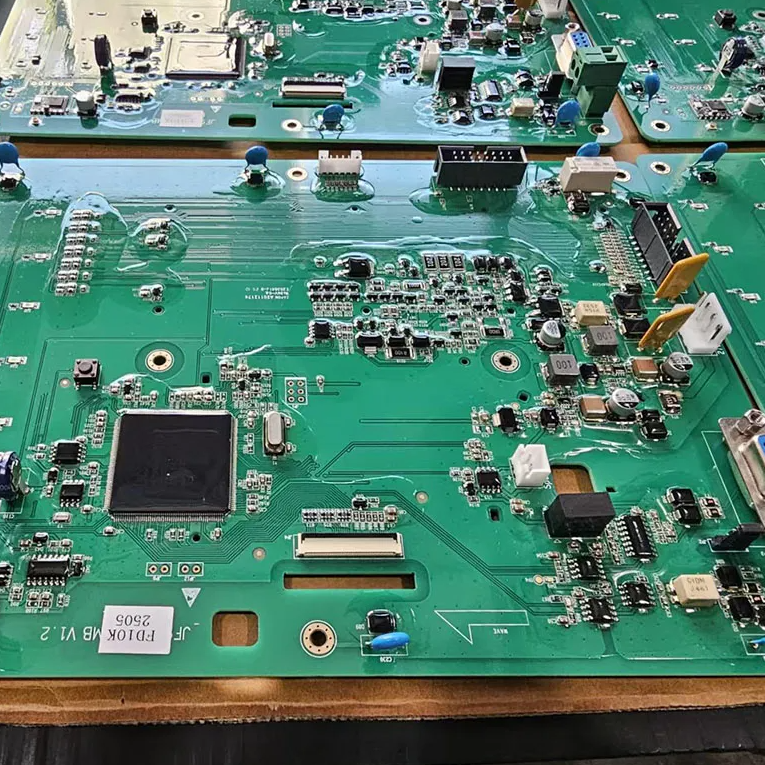
In 2026, battery energy storage systems are being deployed at a scale and in locations that would have been considered impractical a decade ago. Desert solar-plus-storage projects in the Middle East and North Africa operate under sustained UV radiation, sand abrasion, and daytime temperatures that regularly exceed 50°C. Coastal BESS installations in Southeast Asia, the Pacific Islands, and Northern Europe face constant salt-laden air, high humidity, and the electrochemical corrosion that chloride ions accelerate on exposed metal surfaces. Remote off-grid storage systems in high-altitude or tropical locations may go months between maintenance visits, with no tolerance for unplanned electronic failures.
The electronics inside these systems — battery management system boards, inverter control modules, power conversion circuits, communication boards, and sensor arrays — are expected to operate reliably for 15 to 20 years or longer. They are also expected to do so in environments that are fundamentally hostile to unprotected electronics. Moisture, dust, salt spray, corrosive industrial gases, UV radiation, and repeated thermal cycling from day-night temperature swings all attack the solder joints, conductive traces, component leads, and substrate materials of printed circuit boards in ways that accumulate over time and eventually cause failures that are expensive to diagnose, difficult to access, and costly to repair.
Conformal coating is the protective layer that stands between these environmental threats and the electronics that control billions of dollars of energy storage infrastructure. Applied as a thin film over PCB surfaces, component leads, and solder joints, conformal coating creates a barrier that resists moisture ingress, salt-spray corrosion, dust contamination, electrical leakage, and the mechanical stress of thermal cycling. For buyers sourcing conformal coating China solutions for energy storage applications, the selection decision involves chemistry, performance data, application method, and long-term durability — not just price.
Silfluo offers multiple conformal coating options for PCB protection, including silicone, acrylic, and UV/moisture dual-cure systems designed for electronics, new energy, automotive, aerospace, marine, and industrial applications. This guide covers the complete technical and commercial picture for energy storage buyers: why conformal coating is critical for BESS electronics protection, how different coating chemistries perform in harsh environments, what components to evaluate in a coating selection decision, and what application and maintenance practices protect coating performance over a 15 to 20-year service life. Secondary keywords relevant to this decision — BESS electronics protection, solar inverter coating, harsh environment silicone, and long-life industrial resin — are addressed throughout.

To understand why conformal coating has moved from a recommended practice to a non-negotiable requirement for energy storage electronics in 2026, it helps to examine what actually happens to unprotected PCBs in the environments where BESS systems are deployed — and what the consequences of electronic failure mean for project economics.
Conformal coating is defined as a thin protective film — typically 25 to 250 micrometers thick — applied to the surface of a printed circuit board to improve its resistance against moisture, dust, contaminants, short circuits, and environmental stress. The coating conforms to the three-dimensional topology of the PCB surface, covering component leads, solder joints, conductive traces, and substrate areas while leaving designated connectors and test points accessible. The result is a continuous protective barrier that significantly extends the operational life of the electronics in harsh environments.
The electronics inside a BESS system are not a single monolithic unit — they are a collection of interdependent modules, each of which must function correctly for the system to operate safely and efficiently:
Battery Management System boards monitor individual cell voltages, temperatures, and state of charge across hundreds or thousands of battery cells. A BMS failure can trigger safety shutdowns, prevent the system from charging or discharging, or in the worst case fail to detect a thermal runaway event. BMS boards are typically located inside battery cabinets where temperature cycling, humidity, and off-gassing from battery cells create a challenging electrochemical environment.
Inverter control boards manage the power conversion between DC battery storage and AC grid output. These boards operate in environments where thermal cycling from load variation, ambient temperature swings, and cooling system performance all create mechanical stress on solder joints and component connections. Inverter control board failures cause immediate system downtime and typically require specialist service visits.
Communication and monitoring modules support remote monitoring, grid integration, and predictive maintenance functions. In remote BESS installations, communication failures can prevent operators from detecting developing problems before they escalate into major failures.
The deployment environments that 2026 BESS projects face create specific and well-documented threats to all of these electronics:
Desert solar farms combine intense UV radiation that degrades polymer materials, fine sand particles that infiltrate cabinet seals and abrade surfaces, extreme daytime temperatures that stress thermal management systems, and large day-night temperature swings that create repeated thermal cycling stress on solder joints and coating materials.
Coastal and island BESS sites face salt-laden air that deposits chloride ions on PCB surfaces, where they accelerate electrochemical corrosion of copper traces, solder joints, and component leads. Salt-fog corrosion is one of the most aggressive failure mechanisms for unprotected electronics, and its effects accumulate progressively over the 15 to 20-year service life of a BESS installation.
Industrial park and urban storage sites may expose electronics to corrosive gases — hydrogen sulfide, sulfur dioxide, nitrogen oxides — that attack silver and copper surfaces through sulfidation and oxidation reactions that conventional cleaning cannot reverse.
High-humidity tropical regions create condensation risk whenever the cabinet temperature drops below the dew point of the internal air — a condition that occurs regularly during night cooling cycles and can deposit liquid water directly on PCB surfaces.
For buyers sourcing conformal coating China solutions for these applications, the selection decision must account for all of these threat vectors simultaneously — not just the most obvious one.
The working principle of conformal coating in energy storage applications is straightforward in concept but demanding in execution. A coating that performs well in laboratory testing must also maintain its protective properties through 15 to 20 years of thermal cycling, UV exposure, humidity variation, and mechanical vibration in real-world deployment conditions. Understanding the mechanisms by which coating protects electronics — and the mechanisms by which it can fail — is essential for selecting the right chemistry for a specific application.
The Moisture Barrier Mechanism
Moisture is the most pervasive threat to electronics in outdoor and high-humidity environments. Water molecules are small enough to penetrate most polymer materials through diffusion, and once moisture reaches the PCB surface, it can cause several failure modes: electrochemical corrosion of copper traces and solder joints, ionic contamination that creates conductive pathways between adjacent traces, and hydrolysis of component materials that degrades their electrical properties.
A conformal coating reduces moisture ingress by creating a continuous polymer barrier over the PCB surface that slows the diffusion rate of water molecules. The effectiveness of this barrier depends on the coating chemistry, the film thickness, the continuity of coverage, and the coating's resistance to hydrolysis over time. Silicone-based coatings are particularly effective moisture barriers because the silicone polymer backbone is inherently hydrophobic — it repels water rather than absorbing it — and maintains this property throughout its service life without the hydrolytic degradation that affects some other polymer chemistries.
The Thermal Cycling Resistance Mechanism
Outdoor electronics experience repeated thermal cycling as ambient temperatures rise and fall between day and night. In desert environments, this cycling can span 30°C to 40°C or more within a single 24-hour period. Each thermal cycle creates differential expansion and contraction between the PCB substrate, the solder joints, the component bodies, and the coating layer. A rigid coating that cannot accommodate this differential movement will develop microcracks over time, creating pathways for moisture and contaminants to reach the PCB surface beneath.
Silicone conformal coatings are specifically valued for solar inverter coating and BESS electronics protection applications because their inherent flexibility allows them to accommodate thermal cycling stress without cracking. Silfluo's LC-1390 silicone conformal coating series is described as having strong adhesion, thermal cycling resistance, sulfur resistance, moisture and weather durability, salt-spray resistance, dust protection, corrosion resistance, and dielectric insulation — a combination of properties that directly addresses the multi-threat environment of outdoor energy storage electronics.
The UV Degradation Resistance Mechanism
UV radiation from sunlight attacks polymer materials through photochemical reactions that break molecular bonds, causing yellowing, embrittlement, and loss of mechanical properties over time. For conformal coating applied to electronics in outdoor BESS cabinets or solar inverter housings where UV exposure is possible, UV stability is a critical long-term performance requirement.
Silicone polymers have inherently better UV stability than most organic polymer coatings because the silicon-oxygen backbone of the silicone chain is more resistant to UV-induced bond cleavage than carbon-carbon backbones. This makes harsh environment silicone coatings the preferred choice for applications where long-term UV exposure is a design consideration — particularly in desert and high-altitude installations where UV intensity is highest.
The Salt-Spray Corrosion Resistance Mechanism
Salt-spray corrosion occurs when chloride ions from salt-laden air deposit on PCB surfaces and create electrochemical cells that accelerate the oxidation of copper, tin, and other metals. The corrosion products — copper chlorides, tin oxides — are electrically conductive and can create leakage paths between adjacent traces, causing intermittent failures that are difficult to diagnose.
A conformal coating prevents salt-spray corrosion by physically blocking chloride ion access to the metal surfaces of the PCB. The effectiveness of this protection depends on the coating's adhesion to the PCB surface, the continuity of the coating film, and the coating's resistance to chloride ion permeation over time. Salt-fog test data — typically expressed as hours of exposure at defined salt concentration and temperature without evidence of corrosion — is the standard metric for evaluating this protection.
Selecting the right conformal coating for a specific energy storage application requires evaluating multiple performance dimensions simultaneously. A coating that excels in salt-spray resistance but degrades under UV exposure is not suitable for a coastal desert installation. A coating with excellent thermal cycling resistance but poor dust protection is not appropriate for a desert mining-region BESS site. The following component analysis provides a framework for evaluating coating options against the specific threat profile of each deployment environment.
UV Durability
UV durability determines how well the coating maintains its protective properties after years of sunlight exposure. Buyers should request weathering resistance data — typically expressed as hours of accelerated weathering test exposure without significant change in coating properties — and confirm that the coating chemistry is appropriate for the UV intensity of the deployment location. Silicone-based coatings generally offer superior UV durability compared with acrylic or polyurethane alternatives.
Salt-Spray Resistance
Salt-spray resistance is quantified through standardized salt-fog testing. Buyers should request salt-spray test data expressed as hours of exposure at defined conditions without evidence of corrosion or coating failure. For coastal BESS installations, salt-spray resistance is often the primary selection criterion, and buyers should confirm that the test conditions used are representative of the actual deployment environment.
Dust Protection
Dust protection depends on the continuity and adhesion of the coating film. Fine particles that penetrate cabinet seals and deposit on PCB surfaces can create abrasive wear on coating surfaces and, if the coating is damaged, provide a pathway for moisture to reach the PCB. Film continuity inspection — using UV fluorescent tracer technology — is the most reliable method for confirming that dust-vulnerable areas are fully covered.
Thermal Cycling Resistance
Thermal cycling resistance is evaluated through temperature cycling tests that expose coated PCBs to repeated temperature excursions between defined minimum and maximum values. Buyers should request thermal cycling test data and confirm that the test temperature range covers the actual day-night temperature swing at the deployment location.
Dielectric Insulation
Dielectric insulation properties — volume resistivity and dielectric strength — determine the coating's ability to prevent electrical leakage between adjacent conductive features on the PCB under humid or contaminated conditions. These properties are particularly important for high-density PCBs where trace spacing is small and leakage current can cause functional failures.
UV Fluorescent Tracer for Inspection
A UV fluorescent tracer incorporated into the coating formulation allows operators to inspect coating coverage under UV blacklight, identifying missed areas, pinholes, or uneven coverage before the PCB is put into service. Silfluo's LC-CC8102 acrylic conformal coating includes a fluorescent UV tracer for inspection and is positioned for resistance against moisture, salt spray, mildew, and corrosive gases, with a service temperature range of -40°C to +120°C. This inspection capability is particularly valuable for long-life industrial resin applications where coating gaps discovered after deployment require expensive field service visits to correct.
| Protection Factor | Relevance to Energy Storage | Evaluation Method |
|---|---|---|
| UV durability | Desert and high-altitude BESS sites | Accelerated weathering test data |
| Salt-spray resistance | Coastal and island installations | Salt-fog test hours at defined conditions |
| Dust protection | Desert and mining-region sites | Film continuity inspection with UV tracer |
| Thermal cycling resistance | All outdoor installations | Temperature cycling test data |
| Dielectric insulation | High-density PCBs under humidity | Volume resistivity and dielectric strength |
| UV fluorescent tracer | Production and field inspection | UV blacklight coverage verification |
The selection of conformal coating chemistry for energy storage applications is not a one-size-fits-all decision. Different deployment environments, production processes, and rework requirements favor different coating chemistries. Understanding the trade-offs between silicone, acrylic, and UV/moisture dual-cure systems is essential for making the right selection for each specific application.
Silicone Conformal Coating
Silicone conformal coating is the preferred choice for outdoor BESS electronics protection, solar inverter coating, and any application where thermal cycling resistance, UV durability, and long-term moisture protection are the primary requirements. The silicone polymer backbone provides inherent flexibility that accommodates thermal cycling stress without cracking, inherent hydrophobicity that resists moisture absorption, and inherent UV stability that maintains coating properties through years of sunlight exposure.
Silfluo's LC-1390 silicone conformal coating series addresses the full range of harsh environment silicone requirements for energy storage applications: strong adhesion to PCB substrates, thermal cycling resistance across wide temperature ranges, sulfur resistance for industrial gas environments, moisture and weather durability for outdoor deployment, salt-spray resistance for coastal installations, dust protection for desert sites, corrosion resistance for long-service applications, and dielectric insulation for electrical safety.
The primary consideration for silicone conformal coating is cure time — some silicone formulations require longer cure cycles than acrylic alternatives, which may affect production throughput in high-volume manufacturing environments. Buyers should confirm the cure schedule and confirm that it is compatible with their production process before specifying a silicone coating.
Acrylic Conformal Coating
Acrylic conformal coating offers fast processing, good electrical insulation properties, and reworkability — the ability to remove and reapply the coating for component replacement or repair. These properties make acrylic coatings well-suited for general PCB protection applications and for electronics that may require field rework during their service life.
The trade-off compared with silicone is reduced flexibility under severe thermal cycling and potentially lower long-term UV stability. For BESS applications in moderate climates where thermal cycling stress is less severe and UV exposure is limited, acrylic coatings can provide adequate protection at lower material cost. For the most demanding outdoor energy storage environments, silicone is generally the preferred chemistry.
UV/Moisture Dual-Cure Conformal Coating
UV/moisture dual-cure coatings combine fast UV curing for exposed areas with moisture-triggered curing for shadowed areas that UV light cannot reach. This dual-cure mechanism makes them well-suited for high-volume production environments where throughput speed is important and PCB designs include components that create shadowed areas beneath them.
Silfluo's LC-CC7900-150D is a single-component, solvent-free UV/moisture dual-cure conformal coating with a fluorescent UV tracer, UL 94 V0 flame retardancy, and an operating temperature range of -60°C to +135°C. The UL 94 V0 flame retardancy rating is particularly relevant for BESS applications where fire safety is a critical design requirement, and the -60°C to +135°C operating range covers the full temperature envelope of most energy storage deployment environments.
| Coating Type | Best Application | Key Advantage | Primary Consideration |
|---|---|---|---|
| Silicone conformal coating | Outdoor BESS, solar inverters, coastal sites, desert installations | Flexible, UV-stable, moisture-resistant, long service life | Cure time may be longer than acrylic |
| Acrylic conformal coating | General PCB protection, reworkable electronics | Fast processing, reworkable, good electrical insulation | Less flexible than silicone under severe thermal cycling |
| UV/moisture dual-cure coating | High-volume production with shadowed components | Fast UV cure plus moisture cure in hidden areas | Requires UV process control and equipment |
| Harsh environment silicone | Extreme outdoor, coastal, industrial gas environments | Maximum weather resistance and long-life performance | Must be matched to specific application requirements |
Benefits of Correct Coating Selection for Energy Storage Projects
Reduced risk of unplanned downtime caused by moisture, corrosion, or contamination-related PCB failures
Extended service life for inverter control boards, BMS modules, and communication electronics
Better protection against salt-alkali corrosion in coastal and arid-soil environments
Improved thermal cycling durability for electronics in high-temperature-swing locations
Reduced field maintenance frequency and lower lifetime maintenance cost
More stable system performance across the full 15 to 20-year BESS service life
Selecting the right conformal coating chemistry is necessary but not sufficient for achieving the protection performance that energy storage electronics require. The application process, surface preparation, coating thickness control, and long-term inspection and maintenance practices all affect whether the coating delivers its rated protection over a 15 to 20-year service life.
Common Application and Field Challenges
Inadequate surface cleaning before coating application — residual flux, oil, moisture, ionic contaminants, or fingerprints prevent proper adhesion and create coating defects that allow moisture and corrosion to reach the PCB surface
Uneven coating application that leaves pinholes, thin spots, or missed areas — particularly in complex PCB geometries with tall components, connectors, and heat sinks
Shadowed areas beneath components that are not reached by UV curing in single-cure systems — requiring dual-cure formulations or supplementary moisture cure
Coating thickness outside the specified range — too thin provides inadequate protection, too thick can cause stress cracking or interfere with component thermal management
Maintenance teams that are not trained to inspect coated boards correctly or to rework them without damaging the coating on adjacent areas
Pre-Application and Engineering Checklist
Before specifying and applying conformal coating for energy storage electronics, buyers and engineers should confirm the following:
Confirm the operating environment threat profile: desert UV and sand, coastal salt spray, industrial corrosive gases, high humidity, or combined exposure
Identify all PCB modules requiring protection: inverter control boards, BMS boards, communication modules, sensor boards, power control boards
Select coating chemistry based on temperature range, flexibility requirement, UV exposure level, corrosion risk, and rework needs
Request technical data sheets confirming dielectric strength, volume resistivity, adhesion, operating temperature range, salt-spray resistance, and UV weathering performance
Confirm whether UV fluorescent tracer is included for production and field inspection
Validate coating compatibility with PCB substrate materials, connector materials, and any sensitive components that must remain uncoated
Define the application method — brushing, spraying, dipping, or automated selective coating — and confirm that the method achieves the required coverage and thickness
Establish coating thickness control procedures and inspection criteria
Build UV blacklight inspection steps into the production process and field maintenance schedule
Work with a professional conformal coating China supplier that provides technical support for application process development and troubleshooting
Silfluo's product guidance specifies that PCB surfaces should be clean and free of moisture, oil, flux residues, dust, grease, fingerprints, and ionic contaminants before coating application, and that coatings can be applied by brushing, spraying, dipping, or other standard methods depending on the production process and coverage requirements.
Long-Term Maintenance Guide for BESS and Solar Inverter Sites
Inspect coated boards during every scheduled inverter or BMS maintenance visit — do not assume that coating protection is permanent without periodic verification
Use UV blacklight inspection for any coating that includes a fluorescent tracer — this is the most reliable method for identifying coverage gaps, cracks, or delamination
Check for visible coating defects: cracking, peeling, bubbling, discoloration, or exposed copper or solder that indicates coating failure
After any component replacement or board repair, recoat the affected area using the same coating chemistry and confirm coverage with UV inspection before reinstallation
Ensure boards are clean and completely dry before any recoating — moisture trapped beneath a new coating layer will cause adhesion failure
Never scrape, abrade, or puncture the coating during field repair — use appropriate chemical strippers for rework if coating removal is required
Record coating type, product batch, application date, cure date, and any rework history for each board — this documentation supports warranty claims and failure analysis
Prioritize inspection after extreme weather events: sandstorms, salt-fog events, flooding, or severe condensation episodes that may have stressed the coating beyond its design limits
For energy storage systems deployed in the harsh environments of 2026 — desert solar farms, coastal BESS installations, industrial storage sites, and remote off-grid projects — conformal coating is not an optional finishing step. It is a fundamental component of the electronics protection strategy that determines whether a 15 to 20-year BESS investment delivers its projected revenue or is eroded by unplanned downtime, expensive field service visits, and premature component replacement.
The right conformal coating — whether silicone for maximum outdoor durability, acrylic for reworkable general protection, or UV/moisture dual-cure for high-volume production — protects inverter control boards, BMS modules, and communication electronics from the moisture, salt spray, UV radiation, dust, corrosive gases, and thermal cycling that characterize real-world energy storage deployment environments. By reducing the frequency and severity of environmentally-caused electronic failures, conformal coating directly reduces maintenance costs, extends component service life, and protects the revenue stream that BESS projects depend on.
Silfluo provides multiple conformal coating solutions — including silicone conformal coating, acrylic conformal coating, and UV/moisture dual-cure conformal coating — for electronics, new energy, automotive, aerospace, marine, and industrial applications, with technical data support and application guidance for energy storage projects.
Contact Silfluo today to compare conformal coating options for your specific BESS or solar inverter application, request technical data sheets and salt-spray resistance test results, discuss harsh environment silicone selection for your deployment environment, and develop a long-life industrial resin protection strategy that keeps your energy storage electronics performing reliably for the full project service life.
Q1: What is conformal coating and why is it important for energy storage systems?
Conformal coating is a thin protective film applied to printed circuit boards to protect them from moisture, dust, salt spray, corrosive gases, and environmental stress. For energy storage systems, it is critical because BESS electronics — including BMS boards, inverter control modules, and communication boards — are expected to operate reliably for 15 to 20 years in environments that include UV radiation, sand abrasion, salt-laden coastal air, industrial gases, and repeated thermal cycling. Without conformal coating protection, these environmental threats accelerate corrosion, electrical leakage, and mechanical failure in ways that cause unplanned downtime and expensive field service visits.
Q2: Why is silicone conformal coating preferred for outdoor BESS and solar inverter applications?
Silicone conformal coating is preferred for outdoor energy storage applications because its silicone polymer backbone provides three properties that are critical for long-service harsh environment performance: inherent flexibility that accommodates thermal cycling stress without cracking, inherent hydrophobicity that resists moisture absorption over time, and inherent UV stability that maintains coating properties through years of sunlight exposure. These properties make silicone the most reliable chemistry for solar inverter coating and BESS electronics protection in desert, coastal, and high-humidity deployment environments.
Q3: What is the role of a UV fluorescent tracer in conformal coating for energy storage applications?
A UV fluorescent tracer incorporated into the coating formulation allows operators to inspect coating coverage under UV blacklight, identifying missed areas, pinholes, thin spots, or delamination before the PCB is put into service. For energy storage applications where field repair is expensive and time-consuming, catching coating defects during production inspection is far more cost-effective than discovering them after deployment. UV tracer inspection is also valuable during scheduled maintenance visits to verify that the coating remains intact after years of service.
Q4: How does conformal coating protect BESS electronics from salt-spray corrosion?
Salt-spray corrosion occurs when chloride ions from salt-laden air deposit on PCB surfaces and create electrochemical cells that accelerate the oxidation of copper traces, solder joints, and component leads. Conformal coating prevents this by physically blocking chloride ion access to the metal surfaces of the PCB. The effectiveness of this protection depends on coating adhesion, film continuity, and the coating's resistance to chloride ion permeation over time. Buyers should request salt-fog test data — expressed as hours of exposure without evidence of corrosion — when evaluating coatings for coastal BESS installations.
Q5: What should buyers check when sourcing conformal coating China solutions for energy storage projects?
Buyers should verify coating chemistry and its suitability for the specific deployment environment, operating temperature range including both minimum and maximum values, adhesion performance on the PCB substrate materials used, dielectric strength and volume resistivity under humid conditions, salt-spray resistance test data, UV weathering performance for outdoor applications, curing method and compatibility with the production process, UV fluorescent tracer availability for inspection, and the supplier's technical support capability for application process development and troubleshooting.
Q6: Can conformal coating reduce the total maintenance cost of a BESS project over its service life?
Yes. By protecting PCBs from the moisture, corrosion, dust, and electrical leakage that cause environmentally-driven electronic failures, conformal coating reduces the frequency of unplanned downtime events that require field service visits. In remote BESS installations where service visits are expensive — involving specialist technicians, travel to remote locations, and potential crane or access equipment — preventing even a small number of field failures over a 15 to 20-year service life can generate maintenance cost savings that significantly exceed the initial investment in coating materials and application.