Search
lf vmpdms mono vinyl terminated silicone fluid

LF-VMPDMS Mono-Vinyl Terminated Silicone Fluid

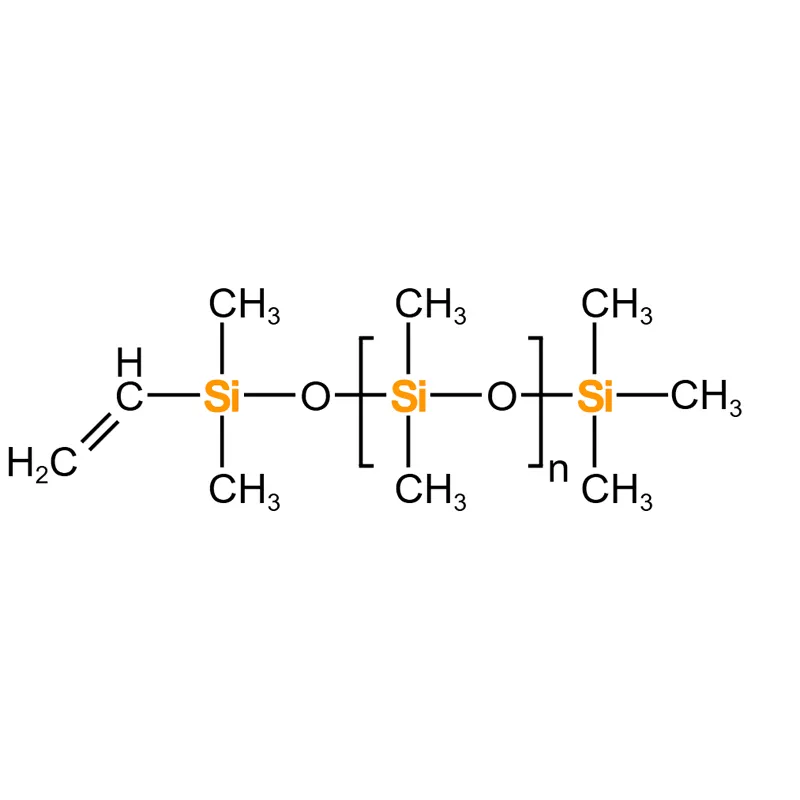
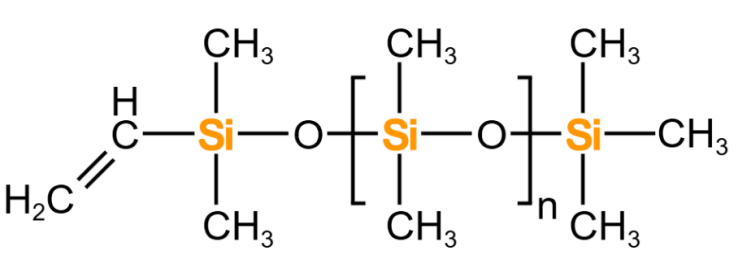
Silfluo LF-VMPDMS is a series of mono-vinyl terminated polydimethylsiloxane polymers with a single reactive vinyl group on one chain end and an inert trimethylsilyl group on the other, available in four viscosity grades (100, 350, 2,000, and 20,000 mPa·s) with custom viscosity and vinyl content available on request.

The mono-functional architecture is the defining structural distinction from di-vinyl terminated LF-VPDMS: when crosslinked into a Pt-catalyzed addition-cure network via hydrosilylation of the single terminal vinyl group, the opposite inert chain end is not incorporated into the network, forming a covalently anchored "dangling chain" — a pendant PDMS segment that reduces crosslink density, lowers cured elastomer hardness, and eliminates the oil bleed associated with non-reactive PDMS diluents.

Vinyl content (mol%) decreases with increasing viscosity, as the single terminal vinyl group represents a progressively smaller proportion of the longer chain; this relationship determines the stoichiometric contribution of LF-VMPDMS to the total Si–H to vinyl balance in the formulation.      

Typical Technical Properties of LF-VMPDMS Mono-Vinyl Terminated Silicone Fluid


Silfluo Code:

LF-VMPDMS

-100

LF-VMPDMS

-350

LF-VMPDMS

-2000

LF-VMPDMS

-20000

Chemical Name:

Synonyms:

Vinyl-Terminated Polydimethylsiloxane

Vinyl Silicone Oil; Vinyl Silicone Fluid; Vi-PDMS; Di-vinyl terminated silicone oil; α,ω-Divinyl polydimethylsiloxane; Di-vi PDMS; Divinyl-terminated PDMS

CAS NO.:


Viscosity (25°C, mPa.s)

100±5

350±10

2000±100

20000±1000

Vinyl Content, mol%

0.52±0.06

0.3±0.05

0.12±0.03

0.05±0.02

Volatile (150°C, 3h)/%

≤1.00

Chemical Structure:

LF-VMPDMS Mono-Vinyl Terminated Silicone Fluid

Note: Custom viscosities and vinyl contents can be tailored to meet specific customer requirements.


Features of LF-VMPDMS Mono-Vinyl Terminated Silicone Fluid


  • Mono-functional reactive architecture — one vinyl end reacts into the network; one inert end forms a covalently anchored dangling chain;

  • Reduces cured elastomer Shore hardness without oil bleed — distinguishes LF-VMPDMS from non-reactive PDMS diluents (LF-PDMS);

  • Four viscosity grades (100–20,000 mPa·s) covering short to long dangling chain lengths for tunable hardness reduction;

  • Custom viscosity and vinyl content available on request;


Applications of LF-VMPDMS Mono-Vinyl Terminated Silicone Fluid


  • Thermal Interface Materials (TIMs)

    Used as reactive plasticizer in Pt-catalyzed addition-cure thermal gels, thermal pads, and phase-change thermal interface materials. Dangling chains from LF-VMPDMS reduce crosslink density and cured Shore hardness, producing the low modulus and high conformability required for thermal contact between heat-generating components and heat sinks. Covalent anchoring into the network eliminates oil bleed — a critical requirement for long-term reliability in electronics thermal management. Typical loading: optimize by hardness target (Shore OO 0–30 for gels); verify oil bleed resistance via ASTM D6386 or equivalent thermal aging test.

  • Skin-Safe and Medical Silicones

    Used in life-casting, prosthetic, and body-safe addition-cure silicone formulations where Shore hardness<10 Shore A and dry, non-tacky surface feel are required. Covalent anchoring prevents migration of uncrosslinked polymer to the surface, which causes the oily surface texture associated with over-plasticized PDMS systems. Confirm biocompatibility of the complete formulation (base polymer, crosslinker, catalyst, filler) via ISO 10993 testing for intended skin-contact or implant-adjacent use.

  • Electronic Encapsulation and Dielectric Gels

    Used in low-stress potting compounds and silicone dielectric gels for sensitive microelectronics where thermal expansion mismatch between the encapsulant and substrate generates mechanical stress on wire bonds and solder joints during thermal cycling. LF-VMPDMS reduces modulus of the cured gel, lowering stress transmission to bonded components. Verify dielectric constant, dissipation factor, and volume resistivity of the cured compound against circuit requirements.

  • Mold-Making Rubber

    Used as reactive softener in addition-cure LSR and RTV-2 mold-making silicone formulations where reduced Shore hardness (typically Shore A 5–20) and zero surface oil bleed are required for clean part release and mold longevity. Adjust loading level to achieve target hardness; recalculate Si–H to total vinyl ratio after incorporating LF-VMPDMS vinyl content contribution.


Package &Storage of LF-VMPDMS Mono-Vinyl Terminated Silicone Fluid


  • Available in 25 KG plastic drums and 200 KG iron drums.

  • Keep strictly away from strong oxidizing agents, corrosive materials, strong acids, and alkalis.

  • Store in a cool, dry, dark, and well-ventilated environment in tightly sealed original containers. Keep away from direct sunlight, heat sources, and open flames. Classified and transported as non-hazardous chemicals.

  • Shelf Life: 12 months from the date of manufacture when stored under the recommended conditions.

Silicone Resin
Your Professional Silanes & Silicones Supplier
Nanjing Silfluo New Material Co., Ltd.
Contact Us
Try Our Best To Meet Your Needs
What's News At Silfluo
Copyright © Nanjing Silfluo New Material Co., Ltd. All Rights Reserved.
inquiry@silfluo.com
0086-18351817618