Typical Technical Properties of LF-HF11 Hydroxyl-Terminated Fluorosilicone Fluid
| Low-Molecular-Weight Grades | Higher-Viscosity Grades |
Silfluo Code: | LF-HF11-MF50 | LF-HF11-HS50 | LF-HF11-HX80 | LF-HF11-HX1000 | LF-HF11-HX5000 |
OH Content (wt.%) | 3.5-6.0 | 3.5-6.0 | ≥8.0 | — | — |
Viscosity (25℃,
mm²/s [cSt]) | 40-60 | 40-60 | 60-100 | 1,000 | 5,000 |
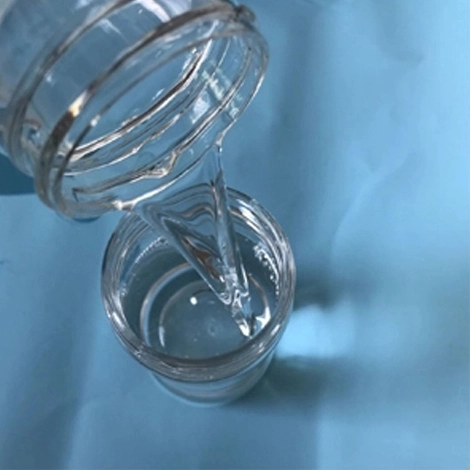
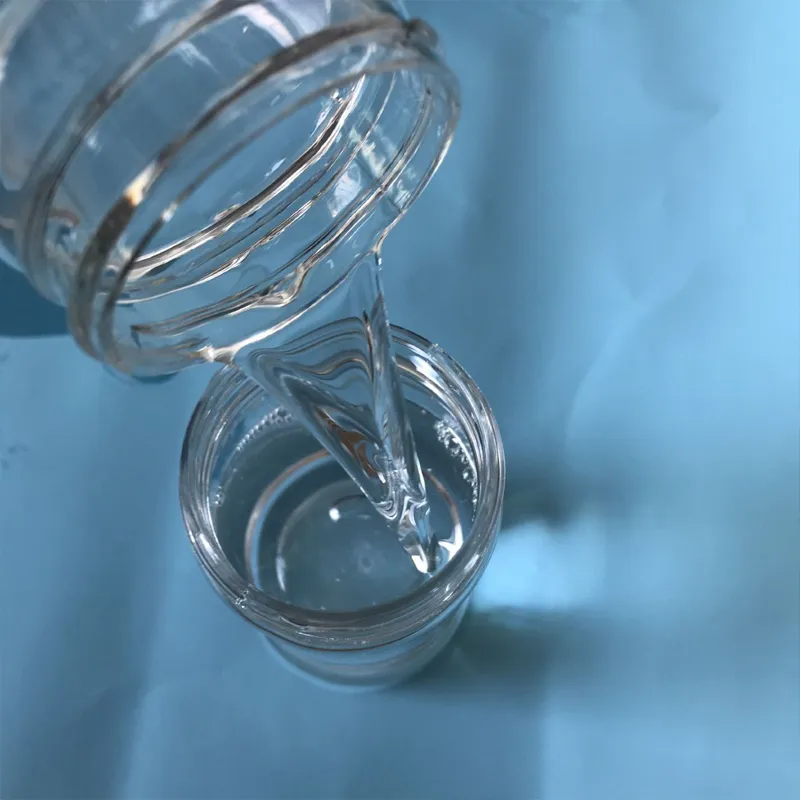
Appearance | Colorless to pale yellow transparent oily liquid |
Refractive Index (25℃) | 1.380-1.400 |
Density (25℃, g/cm³) | 1.00-1.30 |
Flash Point (℃) | >240 |
Volatiles (200℃, 4 h), wt.% | <5 |
Notes: | Viscosity and fluorine content can be customized. Typical values; not for specification. |
Applications of LF-HF11 Hydroxyl-Terminated Fluorosilicone Fluid
1. Structure-Control and Processing Aid for Fluorosilicone Rubber
Low-molecular-weight LF-HF11 grades can be evaluated as structure-control agents in fluorosilicone rubber compounding. Silanol-silica interactions can help control viscosity, reduce storage hardening and improve processability. They may also modify conventional silicone rubber where some improvement in oil and solvent resistance is sought; compatibility, dosage and cured properties must be confirmed by trials.
2. Base Fluid and Reactive Diluent for Condensation-Cure RTV Fluorosilicone
The 1,000 and 5,000 cSt grades can be evaluated as base fluids or reactive diluents in condensation-cure RTV fluorosilicone sealants, mold-making rubbers, adhesives and coatings intended for oil- or solvent-exposure environments. Reactive Si-OH end groups can condense with suitable multifunctional silane crosslinkers in the presence of an appropriate catalyst. Crosslinker level, catalyst, filler compatibility, cure conditions and final performance must be established in the complete formulation.
Package & Storage of LF-HF11 Hydroxyl-Terminated Fluorosilicone Fluid
In 5kg, 25kg and 250kg drum
Keep in cool, dry and ventilated place. This product should be neutral to avoid contact with acidic and alkaline substances. Keep in unopened containers, shelf life is 12 months from the date of production. It is shipped as non-hazardous substance.
Storage beyond the shelf life does not necessarily mean that the product is no longer usable. In this case however, the properties required for the intended use must be checked for quality assurance reasons.
 English
 日本語
日本語 한국어
한국어 français
 Deutsch
 Español
 русский
 português
 العربية
 tiếng việt
 ไทย
ไทย