English
 日本語
日本語 한국어
한국어 français
 Deutsch
 Español
 русский
 português
 العربية
 tiếng việt
 ไทย
ไทย









Your Professional Silanes & Silicones Supplier

Contact Us
Try Our Best To Meet Your Needs
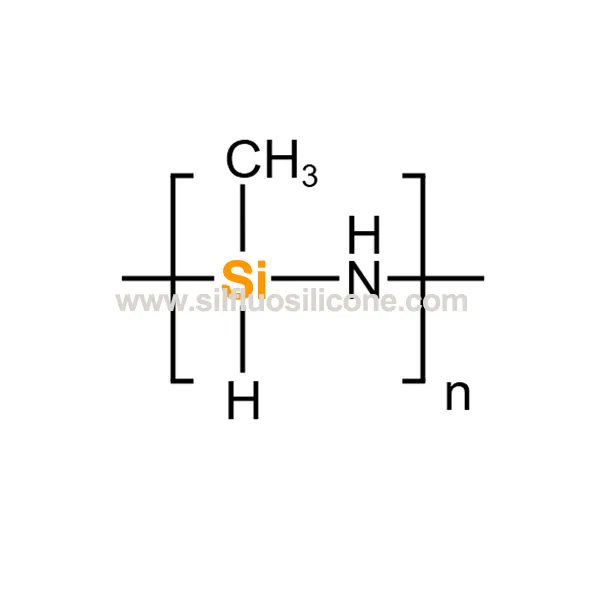
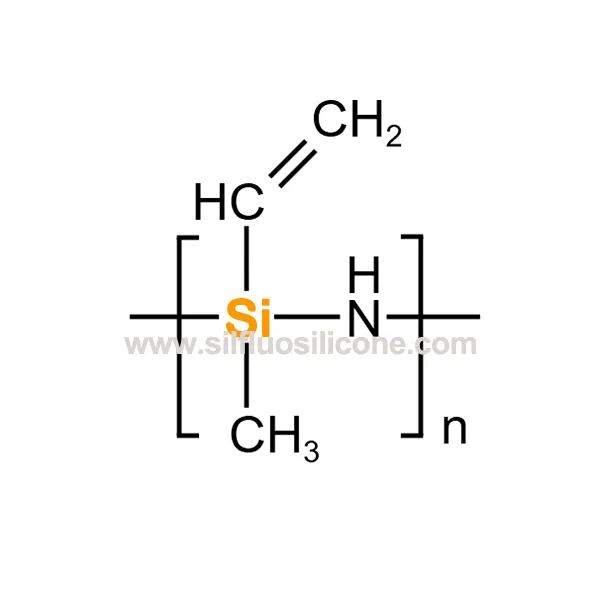
Polysilazanes are a class of inorganic or semi-organic polymers whose main chain consists of alternating silicon (Si) and nitrogen (N) atoms, with the general formula [-SiR₂-NR’-]n. Here, R and R’ can be hydrogen atoms or organic groups (such as methyl, phenyl, vinyl, etc.). Polysilazanes are advanced precursor materials that combine excellent processability with ultra-high ceramic performance. They bridge the gap between polymer chemistry and ceramic science, and are one of the key technologies for manufacturing near-net-shape, complex-structured, high-performance ceramics and composite materials. They have irreplaceable strategic significance in cutting-edge fields such as aerospace, national defense, and new energy. Their core value lies in the controllability "from molecular design to macroscopic properties."
Based on the differences in R and R’, polysilazanes are mainly divided into three categories:
Perhydropolysilazanes:[-SiH₂-NH-]n, where both R and R’ are hydrogen. This is the most "inorganic" type, with very high reactivity and extreme sensitivity to air and moisture.
Organopolysilazanes: R is an organic group (such as methyl -CH₃), and R’ is hydrogen. For example, polymethylsilazane [-Si(CH₃)₂-NH-]n. Compared to the perhydrotype, it has better stability and operability, and is currently the most widely used type.
All-Organopolysilazanes:Both R and R’ are organic groups. For example, [-Si(CH₃)₂-N(CH₃)-]n. This type is the most stable, but has a lower ceramic yield.
The most remarkable characteristic of polysilazanes is their precursor conversion ability.
Pyrolysis Conversion: Polysilazanes can be converted into silicon nitride (Si₃N₄) or silicon carbon nitride (SiCN) ceramics through high-temperature pyrolysis in an inert atmosphere (such as argon). This forms the basis for their role as precursors to "polymer-derived ceramics."
Crosslinking and Curing: Before pyrolysis, they typically require crosslinking and curing at lower temperatures (e.g., 150-400°C) or under the influence of catalysts and moisture to form an insoluble and infusible three-dimensional network structure. This step is crucial to prevent melt loss during pyrolysis, thereby improving ceramic yield.
Designability: By changing the side chain groups (R, R'), the viscosity, solubility, curing behavior, and the composition and properties of the final ceramic can be finely tuned.
Excellent Processability: Before curing, they can be liquids or soluble solids and can be processed using polymeric processes such as spraying, dip coating, spin coating, 3D printing, or impregnation as resin matrices. This makes it possible to manufacture ceramic components with complex shapes.
Low-temperature ceramization: Compared to traditional ceramic sintering which requires temperatures above 1600°C, polysilazane can typically be converted into ceramics at 1000-1200°C, resulting in low energy consumption and the ability to be composited with heat-sensitive substrates (such as carbon fibers and metals).
High-performance ceramic products: The resulting Si₃N₄ or SiCN ceramics possess excellent properties such as resistance to ultra-high temperatures (>1500°C), oxidation resistance, corrosion resistance, high strength, and high hardness.
Excellent precursor compatibility: Particularly suitable as matrix precursors for ceramic matrix composites (CMCs), especially carbon fiber reinforced silicon carbide/silicon nitride matrix composites (C/SiC, C/Si₃N₄). The fiber preform can be effectively filled and densified through polymer impregnation pyrolysis (PIP) technology.

High-Temperature/Oxidation-Resistant Coatings: Coated onto metals (such as titanium alloys, steel), C/C composites, or graphite surfaces to provide high-temperature oxidation and corrosion protection.
Ceramic Matrix Composites (CMCs): Serving as matrix materials for high-performance engine hot-end components (such as nozzles and combustion chambers), spacecraft thermal protection systems, brake discs, etc.
Microelectronics and Optoelectronics: Used as low-dielectric-constant coatings, passivation layers, or for micro-patterning via photocuring of polysilazane.
Porous Ceramics and Ceramic Fibers: Prepared through foaming or electrospinning precursors followed by pyrolysis.
Adhesives and Sealants: Used for high-temperature bonding and sealing of ceramics, metals, etc.